AI quick summary

  • Comprehensive Explanation of the Video: Critical Analysis of Disc Brake Rotor Design & Redesign Proposal
  • Overall Topic
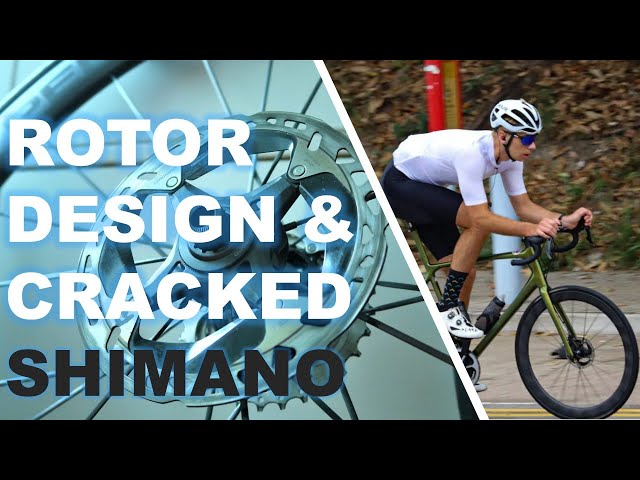
  • The video is a technical critique and redesign proposal for bicycle disc brake rotors, specifically targeting Shimano’s Ice-VTEK design and advocating for solid
Distilled with AI help — read the full piece for complete context.

/ 01

Summary

Comprehensive Explanation of the Video: Critical Analysis of Disc Brake Rotor Design & Redesign Proposal Overall Topic The video is a technical critique and redesign proposal for bicycle disc brake rotors, specifically targeting Shimano’s Ice-VTEK design and advocating for solid steel alternatives. It blends hands-on demonstration with in-depth analysis of thermal management, durability flaws, and road-specific usability issues. --- Structure & Key Features 1. Visual Demonstration (Frames 1-4) - Setting: Consistent white-wall backdrop with a green road bike (disc-brake-equipped) to isolate the subject. - Physical Actions: - Frame 1-3: Demonstrator (light blue shirt, short hair) holds and gestures toward a circular component (identified as a disc brake rotor via speech notes). Shifts grip to showcase details with right-hand gestures. - Frame 4: Moves away from the rotor to show a white object (likely a pen/pointer) and a device (possibly a phone/tablet for visuals), signaling a pivot to theoretical discussion. - Key Physical Elements: - Rotor: Central focus (visual evidence confirms its circular shape, but material/tech specifics are unstated). - Unidentified Blue Object (Frame 2-3)

/ 02

Transcript

[00:00] indo a. coraz

[00:11] vão

[00:25] 鞋,200 quid a year.

[00:27] We're replacing these, and I believe that the Ice-VTEK

[00:31] aluminium sandwich construction is probably not the best solution,

[00:35] and that's led me to choose something else.

[00:37] And yes, the Campi rotors do fit on Ultegra calipers,

[00:41] they're 160mm, same kind of thickness, so they do fit straight on.

[00:44] So why do I not like the Ice-VTEK Shimano design?

[00:47] Well, firmly it's a really nice design because you've got this large aluminium core

[00:53] which goes right to the edge of the disc and either side of that you've got sandwiched in a

[00:57] well making that sandwich you've got a stainless steel laminate which is kind of fused either side

[01:04] now that stainless steel panel either side is very thin but it only needs to be there for the

[01:08] breaking surface and the majority of the thickness is aluminium which actually acts as the heat sink

[01:12] and then it passes the heat to these fins because it's all part of the same construction and the

[01:17] fins are designed to lose the heat to the air now a minimum amount of heat is designed to go into

[01:22] the spider through the pin joints so you're keeping the heat away from the hub keeping the heat away

[01:27] from the bearings in this kind of design the heat is designed to be lost through the fins before it

[01:31] really gets to the spider it's got a floating rotor design it's pinned on these on these four rivets

[01:36] and that goes for the campy ones as well but i believe thermally these these are probably good

[01:42] but the thing i don't like about these is they just don't last and they're very easily knocked out of

[01:47] true because the aluminium sandwich core is probably about two-thirds of the whole thickness

[01:51] is not very stiff and even just getting these in and out of the car putting them into the bike if

[01:57] you knock it on the caliper if you knock it on the car door something it's very easy to put these out

[02:01] true and they're just not that repeatable and i also think there's some kind of thermal hysteresis

[02:06] repeatability issues with these as well because they're not very inherently stiff in the actual

[02:10] braking surface or the rotor sandwich construction is that when the brakes thermal through the heat cycle

[02:16] and get hot and cold hot and cold the mountain mountain conditions on the pins on the spider changes

[02:22] now if those mounting conditions change

[02:25] like ununiformly when they expand and contract the the disc rotor can actually go slightly out of truth

[02:31] now the spider is there for a reason is to allow the braking surface to sort of float somewhat so it can conform to the parallelism of the caliper and of the pads and it allows it a bit of a little bit of float when it gets hot and it expands and contracts and that's pretty much common all over all types of you know motorsport or automotive

[03:01] braking rotor design is that the rotor will actually float a little bit on the hub and is either bolted or pins to allow some kind of little bit of compliance there in terms of thermal cycling and also parallelism conformity to the caliper

[03:14] but in road bikes i think that's probably not the best solution because we're working with such fine clearances between the pads and the disc that floating rotor design i think gives more problems than it actually benefits you so

[03:28] any kind of ununiformity in the way that these pinned conditions work when the thing gets hot and cold can lead to a slightly bent rotor

[03:38] and people refer to as warped rotors well actually what it's kind of that's kind of a misleading term because the rotor itself its material doesn't really change its crystalline structure it doesn't actually warp

[03:47] it's more often than not the the actual pinned conditions are slightly changing and if you get a rotor really really hot and you come to the stop at the bottom of the hill you can also hear these things ticking

[03:57] and that is the expansion and contraction of the braking surface and the hysteresis in the rivets slightly making a ticking noise and that can lead to a slightly warped rotor and that's the most annoying thing is after you finish your descent

[04:10] that was perfectly true at the top and when you get to the bottom you let the brakes off and even when things cooled down and the fluids cooled down and the pistons have come back out to where they started is that that will now be ticking and i just can't stand that it doesn't lose you many watts if you pick up the front wheel and spin it it's hard to any resistance it's not going to be

[04:27] it's more just a pain in the ass to listen to the person sat behind you on the group ride doesn't want to listen to this rubbing all day and it's just a pain

[04:33] the other thing i've got against the shimano brakes is that like i said at the start they just don't seem to last long enough

[04:38] and this one is pretty much on the wear limit i've measured it's 1.5 mil but the steel braking surface is actually delaminated from the aluminium core and i'll show you some pictures of that some close ups of that

[04:51] that is pretty dangerous that could very quickly just wreck itself uh it's delaminated it's bubbled up it's come unbonded from the aluminium core and it's actually cracked in a number of places

[05:00] where the vents in the outer braking surface are at their thinnest or their narrowest position

[05:06] um so durability wise i just don't rate these and yes they might be the best thermally but actually i don't see many complaints about these or other

[05:16] kind of solid steel construction like six volt rotors being you know not good thermally um

[05:21] but the main design ethos of this is to lose the heat at the braking surface or near to the braking surface before the heat goes into the spider and into the hub

[05:29] because actually what you want to do what you really don't want to do is put a lot of heat into the hub shell

[05:34] and you know things without an aluminium spider or all these riveted joints can do that and

[05:40] if you pass a lot of heat directly into the hub shell that's really bad for your bearing life because it ruins the grease the grease goes runny

[05:45] can run out the seals and at worst case let's say this is getting 300 degrees on the braking surface

[05:51] if you've then got 250 degrees let's say in the outside of the hub shell

[05:55] uh worst case you're going to lose your press fit um tolerance on the outer race of the of the wheel

[06:02] bearings basically and if the wheel bearings become loose in their seats and you've ruined your hub you've

[06:06] ruined the bearings and you're probably going to ruin the axle as well so you really don't want to pass too

[06:10] much heat into the hub so you have to be careful if you're not using this pinned joint because

[06:14] if you're talking about thermal pathways if if you want to stop you know thermal flow going through

[06:20] to something you you neck the area and you provide a very small surface contact so thing so brake rotors

[06:27] with the aluminium spider which are rifted on are quite good at keeping the heat to the outside

[06:33] because it's hard for the heat to flow down through that next portion into the spider any heat that does

[06:39] get put in the spider in the aluminium section in these shimano ones is then tried to lose

[06:44] from the spider because it's got very large surface area and quite high thermal mass so if you're going

[06:50] to make something without spider you need to do a bit of thermal simulation to make sure that heat

[06:54] doesn't flow down into the hub before it can be lost to the air so you've got to take that into account

[06:58] but i don't see too many problems with um actually just having the the whole braking surface of steel

[07:05] because it's inherently stiffer uh it's going to have less kind of mechanical hysteresis on the rivets when

[07:11] it gets hot and cold and you thermally cycle it and i just think it's going to be more resilient

[07:16] it's going to be more resilient to knocks when you're getting it in and out of the car it's going

[07:19] to be more resilient to knocks when you're installing into the caliper and how many times you see on tv in

[07:24] the pro peloton where you know some guy gets a puncture um they whip the wheel out the dude rushes out the

[07:29] car bangs the wheels on the car door bangs the wheels on the dropouts of the fork when he's trying to

[07:33] shove it in quickly and then five minutes later you see the same rider stop can complain that he's got a

[07:38] rubbing rotor and i just think the shimano ones they just aren't very sturdy um firmly they're

[07:44] probably the best at losing the heat to the air because of the sandwich construction of the aluminium

[07:48] but i think durability wise they're just not the best and not the most repeatable so i've gone for

[07:54] the steel ones to try them out i've still got the riveted joint i can't do anything about that because

[07:58] you can't actually buy uh center lock steel rotors without this riveted spider but that's where the

[08:05] peak torque disc brake design comes in i'm actually designing my own disc brakes and i'm going to make

[08:10] a center lock steel disc brake without the spider so i'm going for a full steel construction down to

[08:15] the center lock interface and i'm going to try that out now this is going to be a thing i'm going to

[08:20] feature on the channel in the next couple of months if you're interested in getting on board and and you

[08:25] know having a set then do let me know give give me an email write a comment down below but um i'm going

[08:30] to try and do away with the floating rotor design because i think in theory it works and it works in

[08:35] motorsport it works in cars and it works in yeah supercars and stuff but they've got a lot more

[08:38] power clearance in road bike canisters really don't have a lot of clearance to play with so

[08:43] i think the floating rotor and riveted joints give more problems than the benefits they gain

[08:49] so i'm going to go for a solid steel construction down to the center lock interface now now i've got

[08:54] these off i can kind of reverse engineer the spline because obviously shimano don't put the spline

[08:58] standard online for me to look at and to put on my technical drawing so i actually measure that

[09:02] with some qc tools to find out the exact damage of this dimension of the spline um if anyone knows

[09:08] that technical info please do let me know so i can stick it straight into the cad but it's going to

[09:13] be a bit of a weight penalty on the shimano ones or anything with an aluminium spider because

[09:18] i'm going for steel construction all the way around and i have to make spline interface and steel as

[09:22] well which is going to be a fair chunk of material now i've got a weight target in mind of around 150

[09:26] grams but the weight is my lowest priority on this i'm going for repeatability durability and also the

[09:32] thermal the thermal properties of it and then the weight is what it is that's just like the last

[09:37] the last in the priority list so if you're interested um let me know and we'll get this design underway i've

[09:42] already kind of drawn the envelope i've already drawn a couple of different vented solutions i just

[09:46] need to run the thermal sim and also finish off the spline interface uh part of the drawing now most disc

[09:53] brakes uh if you're aware are made out 420 stainless steel now most stainless steels are pretty cheesy

[09:59] soft so you can't make out 304 or 316 which are very good at being stainless um so they use a 420

[10:05] stainless steel which in terms of being stainless isn't actually very good it's quite easy to tarnish

[10:08] but it's actually quite hard for stainless steel so 420 stainless steel is quite a nice material to make

[10:13] you know a bicycle a bicycle disc brake out of but i actually think there's better materials out there

[10:18] and i'm speaking to a metallurgist who contacted me through the channel was a viewer of the channel

[10:23] and we're discussing some different materials to make brakes from now i'll give you a hint of my

[10:27] material of choice um it's not stainless so overnight yeah you might get a few spots of rust

[10:33] come from dampness in the air on the brake surface but you see that in cars no one really cares the

[10:37] first application of the brakes it disappears we can coat the kind of center portion of the the

[10:42] rotor design in in a paint or a coating which will stop the rust there and then the rust will only

[10:47] appear or the tarnishing will only appear on the brake track i'm not really bothered about that but i

[10:50] think there are better materials out there to make rotors from the 420 stainless so it's not going to be

[10:56] a stainless but it's going to be a very hard uh other type of steel i'd much rather replace the

[11:01] brake pads than the discs so often because these lasting six months is not really good enough even

[11:05] if they last a year that's a win for me and it's just quite a cool little fun project to do to see

[11:10] if i can make my own that can outperform these like i said i just need to do the spline interface and

[11:15] do the thermal model and make sure i'm not transferring too much heat into the hub because that's pretty

[11:19] catastrophic so if you're interested in this project let me know i think it'd be a bit fun but yeah that's a

[11:25] little discussion about um disparate design construction and why i don't believe these

[11:29] things i mean if you're a pro team you can afford to replace these every couple of months then i

[11:33] think these are probably the best they're very they're very very light and they probably do the

[11:37] best job of thermal managing um you really don't want to pass too much heat back into the caliper

[11:42] back into the pads and back into the fluid and especially uh if you've got air in the fluid

[11:48] if you can't lose the heat from the rotor and you're passing heat back into

[11:50] into the pads every time it makes contact um the fluid's going to expand if they're not bled properly

[11:56] you're going to get less clearance as the pistons come in so the thermal management of uh how much

[12:02] heat you keep here how much heat you i mean you can pass some heat into the hub and use the hub as

[12:07] a heat sink as long as you don't pass like 300 degrees to the hub uh melt the grease and lose the bearing

[12:12] fit um that you know that's an issue but it's all a balance between how much heat you keep at the

[12:18] brake track how much heat you can pass into the spider and how much heat you can tolerate in the

[12:22] hub you can't tolerate much heat in the hub you have to keep it outside here and try and lose it to the

[12:26] air if you keep this too hot then you pass it back into the caliper the caliper gets hot the fluid gets

[12:33] hot and the pistons come in so it's a very tricky balance on you know the thermal path of all this heat

[12:41] adding mass is going to help adding thermal mass is going to help adding surface area will help

[12:46] so the weight target of mine being lowest priority kind of helps on those two things anyway so um yeah

[12:53] in the next couple of videos maybe i'll share with you some designs and we'll see if anyone's

[12:57] interested but hope you enjoyed that uh i'm going to try these campy discs out so far after bedding

[13:03] them in they work absolutely fine uh they've still got the floating rotor design which i don't quite

[13:07] like i prefer just a solid construction i've never really had any problems with solid construction six

[13:12] bolt rotors um i don't believe the floating rotor design works too well uh for bikes and it's the

[13:20] same and it's the same with the mountain bike um these are quite basic uh ice tech xt style rotors i

[13:29] think these are xt and again although it doesn't look like it and they don't have the big extra fins

[13:34] most of the material of that thickness of the disc brake is aluminium so cheers and see you in the next one

/ Sources

Sources & further reading

/ WATCH FURTHER

Keep going with video

Watch on YouTube ↗

END /Keep reading →