Data · 2026.07.08
Training With Power: How to Use Power Zones Without Obsessing
Power zones are a tool for deciding how hard to ride today — not a scoreboard. Here's how to set and use them without turning every ride into an exam.
Read story →CATEGORY 02
Power, heart rate, and training load — learning to read what your body is telling you.
Data · 2026.07.08
Power zones are a tool for deciding how hard to ride today — not a scoreboard. Here's how to set and use them without turning every ride into an exam.
Read story →Data · 2026.07.15
Zone 2 is the most talked-about and most misunderstood intensity in cycling. What it actually is, why it works, and the mistakes that turn it into junk miles.
Read story →Data · 2026.07.15
Three common ways to find your functional threshold power, side by side — accuracy, suffering, and when to use each.
Read story →Data · 2026.07.15
The two ways to measure cycling intensity, compared. What each one actually tells you, where each falls short, and how to use them together.
Read story →Data · 2026.07.16
High cadence vs low cadence — what each one does, why experienced riders spin at 90+ rpm, and how to find the cadence that actually suits you.
Read story →Data · 2026.07.16
Fitness is built during recovery, not during the ride. A practical guide to sleep, fueling, active recovery, and spotting overtraining.
Read story →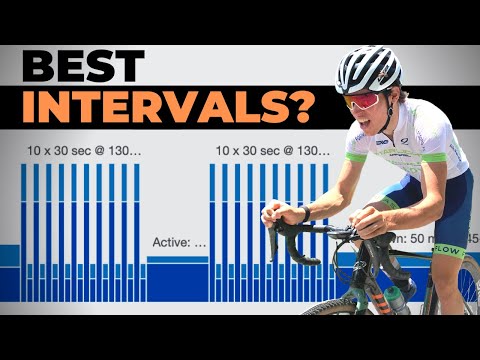
Data · 2020.06.17
Three useful interval formats solve different problems. Here is how their intensity, recovery, pacing, and training cost compare — and how to choose one without turning every hard ride into a test.
Read story →Data · 2026.07.23
A power meter that reads 2% high every ride trains you perfectly; a power meter that drifts between rides is useless. The difference between calibration and zero offset, how to calibrate, and why consistency matters more than absolute accuracy.
Read story →Data · 2026.07.23
Periodization is the structure that turns riding into training — base (build the engine), build (raise the threshold), peak (sharpen for the event). Here's how to structure a season, when to do each phase, and why most riders get it backwards.
Read story →Data · 2026.07.26
100 miles is a milestone. Here's how to actually finish one — the eight-week build, pacing strategy, fueling math, mental game, and a complete gear checklist.
Read story →Data · 2026.07.26
Sweat sodium concentration varies tenfold between riders. Match electrolyte intake to actual loss, not to generic sports-drink marketing.
Read story →Data · 2026.07.26
Single-source carbs cap at about 60 g/hr in the gut. The 2:1 glucose-to-fructose ratio breaks that limit using separate intestinal transporters.
Read story →Data · 2026.07.26
Top up liver glycogen, top off muscle glycogen, and keep the gut quiet. The 1–4 g/kg window one to four hours before riding, with caveats for low-carb approaches.
Read story →Data · 2026.07.26
Restore muscle glycogen and trigger muscle protein synthesis after riding. The window is wider than the 30-minute myth — but timing and dose still matter.
Read story →Data · 2026.07.26
The Australian Institute of Sport Group A list names the supplements with strong evidence for cycling performance. Four compounds, dosed correctly, are the entire short list.
Read story →Data · 2026.07.26
Crits don't reward the strongest rider — they reward the one who can sprint out of 50 corners and still kick at the line. Here's an 8-week plan built on repeatability, threshold, and a finish you can actually use.
Read story →Data · 2026.07.26
A hill climb is the most honest event in cycling — no draft, no tactics, no hiding. Three to twenty minutes straight up. Here is how to train for one and how to pace it on the day.
Read story →Data · 2026.07.26
The time trial is the race of truth — no draft, no team, just you against the clock. The work is in your threshold engine, your aero position, and the discipline to hold both for the full distance.
Read story →Data · 2026.07.26
Gravel racing — Unbound, Mid South, or your local series — is an endurance event with a handling tax. The engine is long Zone 2; the racing is fueling, pacing, and terrain management.
Read story →Data · 2026.07.26
The off-season is where next year's form is built. Base endurance, gym strength, cross-training, and an honest mental break — the four pillars of a productive winter.
Read story →Data · 2026.07.27
Bonking isn't strength — it's a fueling failure. How many grams of carbohydrate per hour (60, 90, 120), the energy sources, and what to eat and drink to ride 4+ hours without crashing.
Read story →Data · 2026.07.27
More training isn't always better — at some point, it's counterproductive. The physical signs, the performance markers, and the recovery tactics that separate productive overload from destructive overtraining.
Read story →Data · 2026.07.28
Riding 100 miles in a day is a milestone every cyclist should hit at least once. The fitness you need, the 12-week progressive build, what to do on event day (fueling, pacing, the mental game), and how to finish strong.
Read story →Data · 2026.07.28
Average power lies about how hard your ride was. Normalized Power, Intensity Factor, and Variability Index are the metrics that tell the truth — what they mean, how to read them, and why they're the foundation of every training decision.
Read story →Data · 2026.07.28
HRV measures the gap between heartbeats — a window into your nervous system's recovery state. High HRV = recovered and ready; low HRV = fatigued or stressed. How to measure it, what the numbers mean, and how to use it to decide when to push and when to rest.
Read story →Data · 2026.07.28
Zwift turned the indoor trainer from a punishment into a game — and a training tool. How to set up, which workouts to do, how to structure a winter on Zwift, and why it's the most effective indoor training platform for cyclists.
Read story →Data · 2026.07.28
The taper is the final 1–2 weeks before a target event — reduce volume to shed fatigue while keeping intensity sharp. The science, the common mistakes, and a day-by-day taper protocol that delivers you to the start line flying.
Read story →Data · 2026.07.28
Cycling burns calories — but that alone doesn't guarantee fat loss. The training that maximizes fat burning, the nutrition that creates a sustainable deficit, and the common mistakes that make cyclists GAIN weight despite riding 10 hours a week.
Read story →Data · 2026.07.28
Heat is cycling's invisible enemy — above 30°C, your power drops, your heart rate spikes, and your perceived effort skyrockets. How heat affects performance, how to acclimatize, the hydration strategy that prevents the slide, and how to ride fast when it's hot.
Read story →Data · 2026.07.29
Altitude training is the secret weapon of the pro peloton — more red blood cells, more oxygen-carrying capacity, more power at sea level. The science, the protocols (live high/train low), and whether it's worth it for amateur cyclists.
Read story →Data · 2026.07.29
The indoor trainer isn't a punishment — it's the most time-efficient way to train. Five 60-minute structured workouts that target threshold, VO2, endurance, sprint, and recovery, with exact wattage targets and rest intervals.
Read story →Data · 2026.07.29
Pedaling is cycling's most repetitive motion — 5,000+ times per hour. Small inefficiencies compound into significant power loss over a ride. The mechanics of an efficient pedal stroke, the drills that improve it, and the myths about 'pedaling circles'.
Read story →Data · 2026.07.29
A coach turns random training into structured progress — but they're not for everyone. When coaching is worth the investment, how to find the right coach, what to expect, and the alternatives (training apps, pre-built plans) that might serve you just as well.
Read story →Data · 2026.07.29
Recovery is where fitness is built — the workout breaks you down, the recovery builds you back stronger. The evidence-based recovery methods (sleep, nutrition, active recovery) vs the gimmicks (ice baths, compression boots, supplements). What the science says.
Read story →Data · 2026.07.29
A power meter gives you data — but data without analysis is just numbers. How to read a ride file, identify your strengths and weaknesses, track fitness over time, and use the data to make better training decisions.
Read story →Data · 2026.07.29
The 60 minutes after your ride are when your body is most receptive to replenishment. The protein + carb ratio, timing, real-food options vs recovery shakes, and the recovery meals that actually taste good.
Read story →Data · 2026.07.29
Your cadence affects efficiency, fatigue, and power output. The drills that expand your usable cadence range — high-spin (100+ rpm), slow-turn (50–60 rpm), and one-leg drills — and how to find your optimal pedaling rate.
Read story →Data · 2026.07.26
Motivation is a system, not a feeling. The riders who train year-round engineer it with structure, identity, and small bets — not willpower.
Read story →Data · 2026.07.26
Anxiety before a race is not a sign you are unprepared — it is your nervous system preparing for effort. The job is to channel it, not eliminate it.
Read story →Data · 2026.07.26
A goal that falls apart in week six was not realistic, it was a wish. The SMART framework, adapted for cycling, fixes the failure modes that wreck most seasons.
Read story →Data · 2026.07.26
Toughness on the bike is not a personality trait you are born with. It is a set of skills — attentional, narrative, physiological — that compound over years.
Read story →Data · 2026.07.26
Flow is not a mystical accident. It is a recognisable state with reliable triggers — challenge-match, clear feedback, and full attention — and cyclists can engineer for it.
Read story →Data · 2026.07.26
Breaking down the 360-degree pedal stroke into its four phases, the force vectors at play, and what separates a smooth rider from a masher.
Read story →Data · 2026.07.26
Quads, glutes, hamstrings, calves — each fires in a specific window of the pedal stroke. Here is how the load shifts across your leg.
Read story →Data · 2026.07.26
Diaphragm mechanics, cadence-locked rhythm, and hip angle — how to actually breathe on a bike instead of just gasping.
Read story →Data · 2026.07.26
Functional versus structural asymmetry, when to add a cleat shim, and why half of cyclists have a 5mm difference they never feel.
Read story →Data · 2026.07.26
FTP sets the ceiling. Economy sets how much fuel you burn sitting under it. Here is what actually moves the needle.
Read story →Data · 2026.07.26
Two philosophies, one engine. How to balance threshold intervals against long Zone 2 miles — and what the polarized training research actually says.
Read story →Data · 2026.07.26
TrainerRoad-style discipline versus group rides and careless miles. The honest trade-offs of each approach, and where most amateurs land.
Read story →Data · 2026.07.26
Running, swimming, strength, yoga, hiking — what cross-training helps cyclists, what doesn't, and how to integrate it without sacrificing bike fitness.
Read story →Data · 2026.07.26
A week of structured miles in Mallorca, Girona, or Tenerife. The real benefits — and the catches — of joining a training camp.
Read story →Data · 2026.07.26
A real recovery ride is barely a ride. Here's how to do Zone 1 right — and why most riders ride them too hard.
Read story →