Edited by Julian Cooper under the editorial policy and advertising disclosure.
AI quick summary
- Periodization structures a season into Base (build aerobic volume, Zone 2), Build (raise threshold and VO2 with intervals), and Peak (sharpen and taper for a target event). Most riders skip Base and wonder why they plateau
- Base is the foundation — without consistent Zone 2 volume, the Build intervals don't stick. You can't raise a threshold that has no base under it
- Peak is about freshness, not more fitness — a 1-2 week taper reduces volume to shed fatigue while preserving the fitness you built. Over-tapering loses fitness; under-tapering carries fatigue
- Reverse periodization (high-intensity in winter, Base outdoors in spring) works for riders with limited indoor time — but the phases still apply, just reordered
/ 01
The three phases
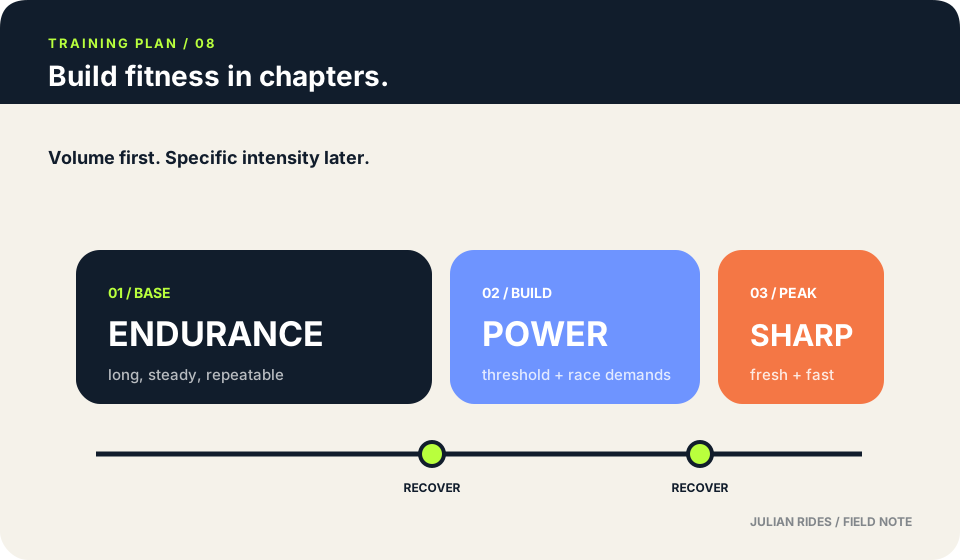
The classic periodization model. Phase lengths assume a season targeting a mid-summer peak event.
| Phase | Goal | Typical length | Key workouts |
|---|---|---|---|
| Base | Build aerobic volume and efficiency | 8-12 weeks (winter/early season) | Long Zone 2 rides, endurance volume, occasional tempo |
| Build | Raise threshold and VO2 max | 6-8 weeks (pre-event) | Threshold and VO2 intervals, 2x/week hard sessions |
| Peak | Sharpen and taper for the event | 1-2 weeks (immediately pre-event) | Reduced volume, openers, race-pace efforts |
/ 02
Base — the foundation most riders skip
Base is the aerobic foundation: consistent Zone 2 volume that builds mitochondrial density, capillary network, and fat-burning efficiency. It is the least glamorous phase — long, easy rides that feel unproductive — and it is the phase most riders skip or shortchange, which is why most riders plateau.
The reason Base matters: it raises the ceiling that Build can then push against. Without a base of aerobic efficiency, threshold and VO2 intervals produce short-term gains that fade quickly. With a base, the same intervals produce gains that stick. The base is what makes the hard work durable.
How much Base: 8-12 weeks of consistent Zone 2, building long-ride duration to 3-4 hours. The classic advice (3-5 hours/week of genuine Zone 2, sustained for 6-8 weeks) comes from this phase. If you can't do Zone 2 outdoors (winter), the trainer is where it happens — boring but essential.
/ 03
Build — raising the threshold
Build is where the intervals live: 2 hard sessions per week (threshold and VO2), surrounded by endurance and recovery. The goal is to push up your FTP (threshold) and your VO2 max — the two numbers that determine how hard you can ride sustainably and how high your ceiling is.
A typical Build week: Monday recovery, Tuesday threshold intervals (e.g., 3x12 min at FTP), Wednesday endurance, Thursday VO2 intervals (e.g., 5x4 min at 110% FTP), Friday recovery, Saturday long endurance (3-4 hours with some Zone 2), Sunday endurance or rest. The two hard days are the stimulus; the other days are recovery and base maintenance.
Build lasts 6-8 weeks before diminishing returns and the need to recover. Push beyond that without a recovery block and you overtrain — the fitness you built starts to erode. A 1-week recovery block (50% volume, no intervals) every 4 weeks is the standard rhythm.
/ 04
Peak — sharpening and the taper
Peak is about freshness, not more fitness. The taper (1-2 weeks before the target event) reduces volume by 40-60% to shed accumulated fatigue while preserving the fitness you built. You arrive at the event rested and sharp, not exhausted from training.
The taper keeps intensity high (short, hard efforts to maintain neuromuscular sharpness) but cuts volume. A common taper: in the final week, reduce ride duration to 60% of normal, keep one short session of race-pace intervals, and add a day of complete rest 2-3 days before the event. The goal is to feel hungry and fresh on the start line, not tired.
The two tapering errors: over-tapering (too much rest, you lose fitness and arrive flat) and under-tapering (not enough rest, you carry fatigue and arrive heavy). Most riders under-taper — the instinct to 'train more' right before an event is strong and wrong. Trust the taper.
/ 05
Reverse periodization — when Base comes in spring
Reverse periodization flips the order: high-intensity Build work indoors in winter (when long outdoor rides aren't possible), then Base volume outdoors in spring. It works for riders with limited indoor trainer time or harsh winters, and the research suggests it's roughly as effective as classic periodization for most riders.
The phases still apply — Base, Build, Peak — just reordered around the calendar. The key is that all three phases happen; the order is less important than the consistency. If you can only do intensity indoors in winter, do it, and build your Base volume when the weather allows.
The honest advice: don't overthink the order. Pick a target event, count back 1-2 weeks for the taper (Peak), 6-8 weeks before that for Build, and fill the preceding time with Base. Adjust for your climate and your life. Consistency across all three phases matters more than the precise sequence.
/ Sources