Edited by Julian Cooper under the editorial policy and advertising disclosure.
AI quick summary
- For rides over about 90 minutes, aim for 30–60 g of carbohydrate per hour to delay fatigue.
- Hydrate to thirst and include sodium on hot days or long rides — plain water alone isn't enough.
- The classic mistake is starting to eat only when you feel bad; by then you're already behind.
/ 01
Why fueling matters
Your body stores enough carbohydrate (glycogen) for roughly 60–90 minutes of moderate-to-hard riding. Once that runs low, power collapses — the dreaded 'bonk.' For any ride longer than about 90 minutes, eating during the ride is what keeps you strong to the end.
/ 02
Carbohydrate targets by ride length
General guidance — heavier or harder riding trends higher.
| Ride length | Carbs per hour | Notes |
|---|---|---|
| Under 60 min | Not needed | Just hydrate |
| 60–90 min | ~30 g | Light fueling |
| 2–4 hours | 30–60 g | Steady fueling |
| 4+ hours / hard | up to 60–90 g | Maximize intake (mixed carbs) |
/ 03
Before and after
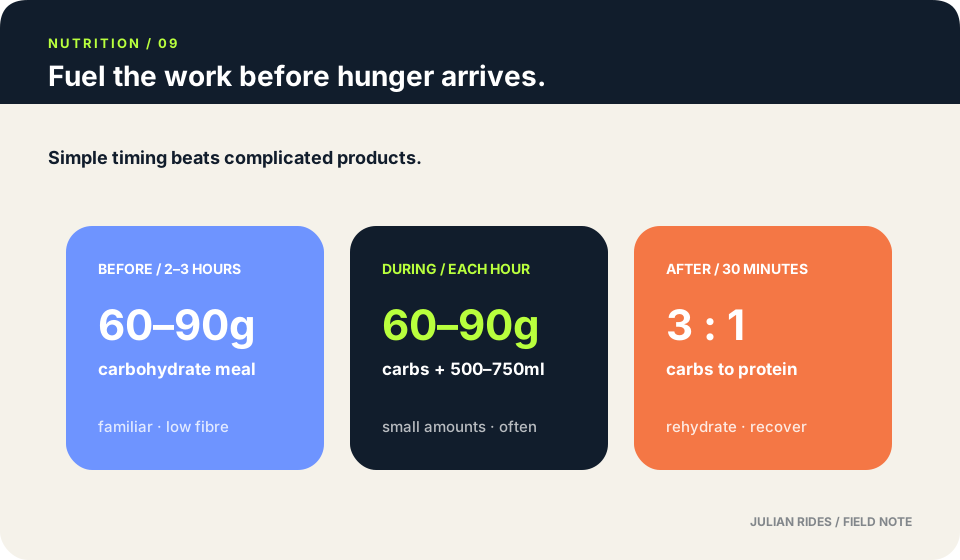
Eat a carb-rich meal 2–3 hours before a big ride, or a smaller carb snack in the hour before if you're short on time. After a hard or long ride, get carbs and some protein within the first hour or two — roughly a 3:1 ratio of carbs to protein helps replenish glycogen and start recovery.
/ 04
Hydration and electrolytes
Drink to thirst and match output to conditions — more in heat. Plain water replaces fluid but not the sodium you sweat out, so on long or hot rides use an electrolyte drink or salt capsules. Losing too much sodium causes cramping and worse, and drinking only plain water for hours can actually dilute your blood sodium.
/ 05
Common mistakes
Waiting until you feel bad to eat — by then you're catching up, not preventing. Trying new fuel on event day — always practice with what you'll actually use. And ignoring hydration in cool weather — you still lose fluid and sodium even when you don't feel hot.
/ Sources